




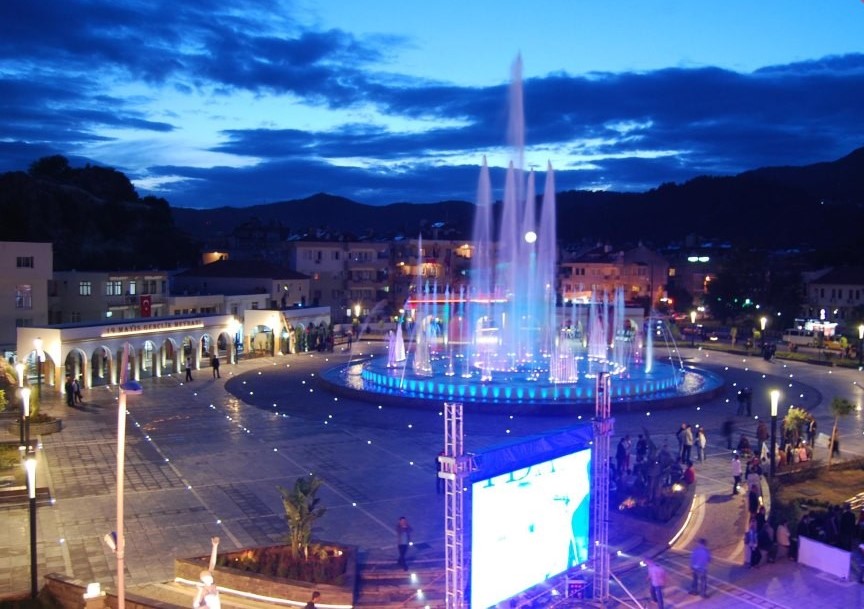
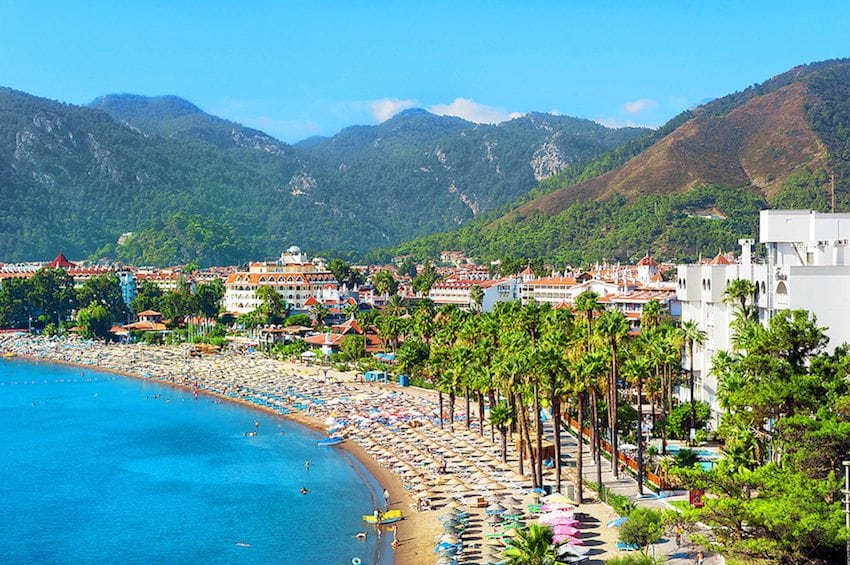
Surrounded on the west by the Datça peninsula and the Bay of Kerme, on the north by Ula and on the east by the mountains of Balan, Karadağ and the Daily Hills, the small town lies on the coast of the Mediterranean Sea. The headland of Adaköy with the islands of Sedir, Keçi and Pigeon border the lively bay in the south. Kale Mahallesi, the oldest part of the city, was built on the hills that stretch towards the sea. Marmaris developed from there towards the foothills of the valley and along the coast.
The history of Marmaris dates back to 12000 BC. Due to the warm summers, mild winters and the location between the mountains, Marmaris is one of the wettest regions in Turkey and has therefore always been particularly fertile. Also attractive to the region was the geographic encirclement of the bay, which made it difficult to attack and the perfect base for military commanders, and its proximity to Rhodes and the Aegean Islands. As a result, the area was fought over by a wide variety of ethnic groups and influences from the Carian, Rhodian and island civilizations, Egyptian, Assyrian, Persian, Macedonian, Syrian, Roman, Byzantine, Seljuk and Ottoman culture can still be found today. Many historic buildings were destroyed or damaged in an earthquake in 1958, but a walk through the narrow streets between the half-timbered houses in the old town is still worthwhile.
Marmaris is well developed in terms of tourism and is considered a pulsating city on the Aegean coast. The beach promenade is long and densely built with hotels and restaurants, and sun loungers, most of which can be used free of charge, are lined up on the beaches. With a visit to a Turkish hammam, Marmaris invites you to wellness, with shopping opportunities, quad and jeep rides, fishing and water sports, the area is also known for attractive leisure activities.